Your Carton of Eggs Looks Nothing Like the Store’s…and that’s a good thing!
If you've ever cracked a store-bought egg and a pasture-raised egg side by side, you've probably noticed the yolk color is different. What you probably haven't noticed is everything the store egg is hiding from you.
Our hens just started laying, and that means we're collecting a wild range of sizes, shapes and the occasional “is this normal?” surprise. Here's what's actually going on, and why you're seeing it while the grocery store never shows you a thing.
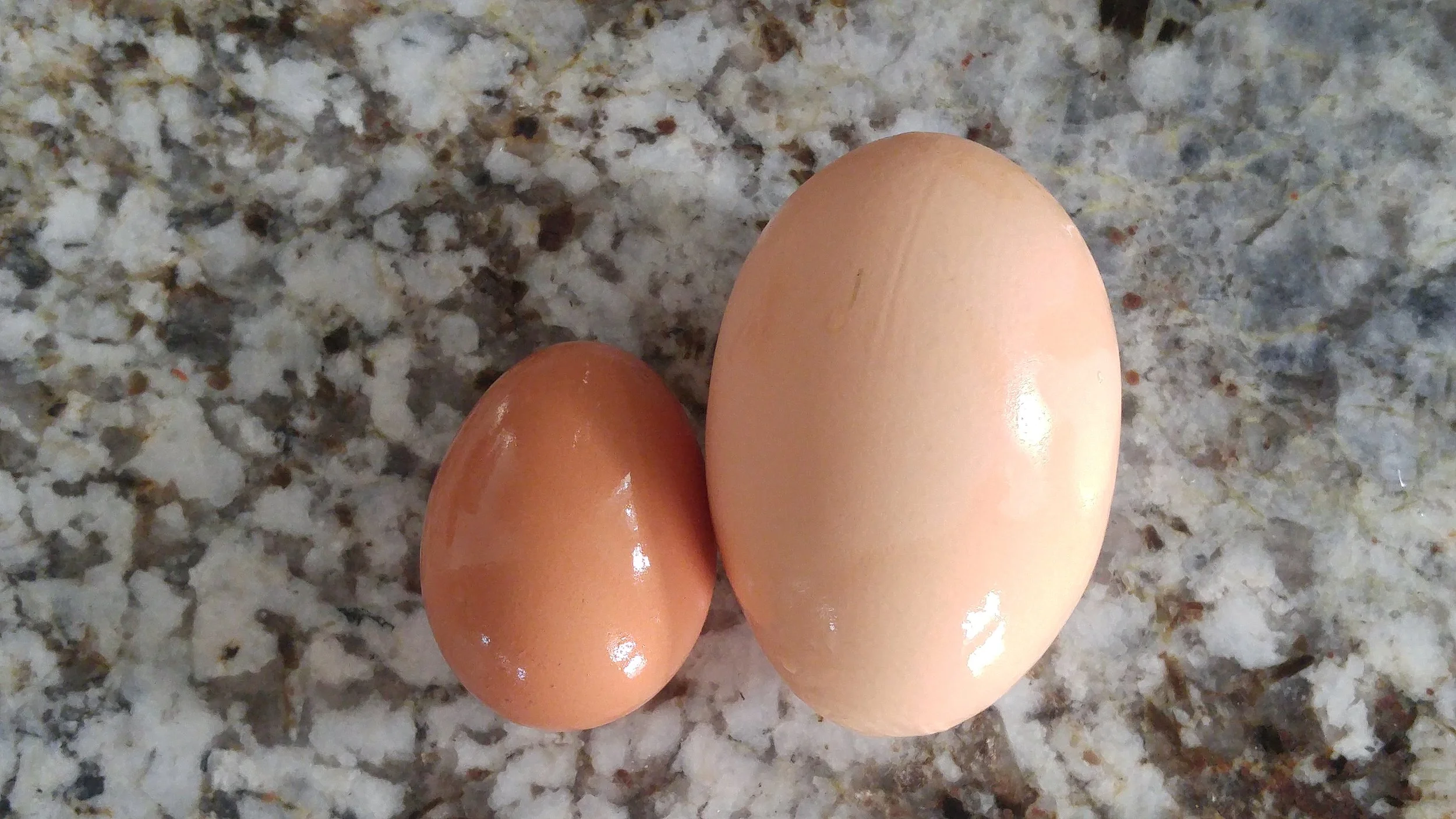
Same breed of chicken, same age…entirely different sizes!
Why Store Eggs All Look the Same
Commercial eggs go through a process called grading. Every egg passes over a light (called candling) where a trained inspector or a machine checks for cracks, blood spots, dirty shells and anything else out of the ordinary. Anything abnormal gets pulled out before it's ever packed. What's left gets sorted by weight into the size categories on the carton (Jumbo, Extra Large, Large, Medium, Small) so every dozen looks uniform.
To be perfectly clear, this doesn't mean commercial hens aren't laying the same oddities ours are. It just means you never see them. The system is built to hide natural variation, not eliminate it.
We don't run our eggs through that system. What our hens lay goes straight from the nesting box to your carton (minus anything actually unsafe). So let's go through what you might find.
Pullet Eggs (the tiny ones)
Pullet eggs are a young hen's very first eggs, and they're small, sometimes almost comically so. Her reproductive system is still calibrating. Give her a few weeks of laying and the size steadily climbs to normal. If you got a mini egg in your carton this month, that's why.
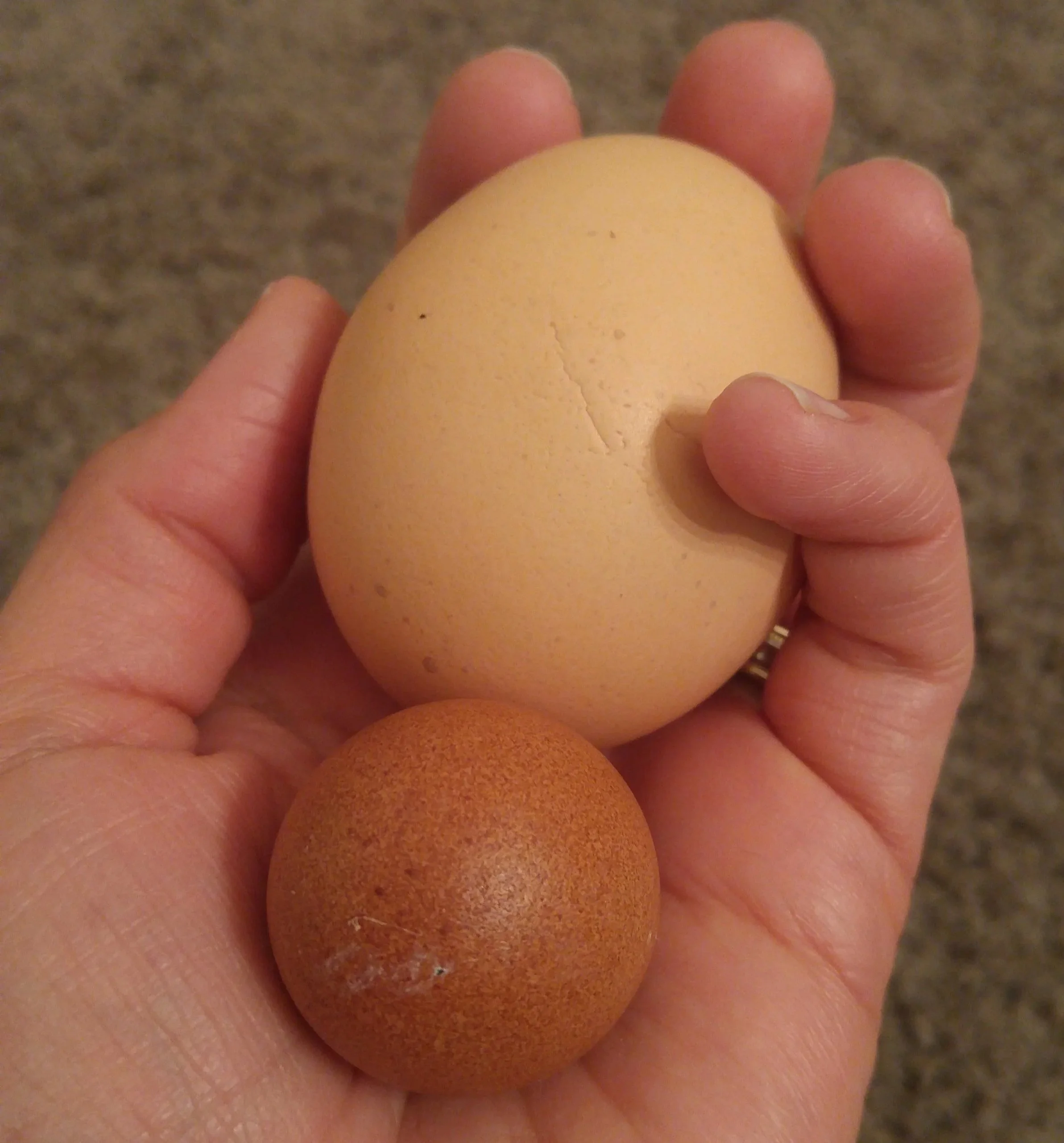
A completely round pullet egg next to a more normally-sized egg that has some wrinkles! Some eggs are far more wrinkled than this, but still safe to eat.
Double Yolkers
Occasionally a young hen's body releases two yolks close together, and both end up wrapped in a single shell. The result is a noticeably oversized egg with two yolks inside. It's most common in hens just starting to lay, and it tapers off as her cycle settles into a rhythm. Perfectly safe, and honestly kind of fun to find. Right after I had the twins (my twins), I made breakfast one morning and cracked four double-yolkers in a row into the pan! Seeing double at the Boudro Farm!
Wind Eggs (Fart Eggs)
Yes, that's really what they're called. A wind egg (also called a fairy egg or dwarf egg) is a tiny egg with little or no yolk inside. It happens when a bit of tissue or foreign material triggers the egg-making process without a yolk to build around. You'll mostly see these from young hens just coming into lay, though an older hen can lay one too if something disrupts her routine, like a new flock mate or a feed change.
Shell-less and Soft-Shell Eggs
Sometimes you'll find something that feels more like a water balloon than an egg, held together by a thin membrane instead of a hard shell. Shell-less eggs show up most often in new layers whose shell-building process (which depends on calcium, phosphorus and vitamin D) hasn't fully kicked in yet. Stress or a change in routine can cause them in older hens too. (And if a duck gets a hold of them, they will run around holding these flexible eggs in their beak! It’s so funny to watch!)
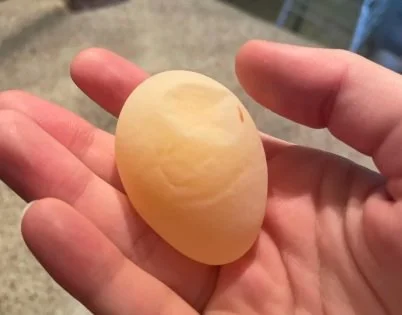
A shell less egg. Completely normal, but you won’t get one in your box. They are a bit difficult to transport!
Wrinkled Shells, Blood Spots, and Odd Shapes
You may also notice a wrinkled or ridged shell, or open one up to find a small blood or meat spot in the yolk. Wrinkled shells usually happen when an egg gets an extra squeeze on its way down the oviduct. Blood spots happen when a tiny blood vessel ruptures during yolk release, they're completely safe to eat and have nothing to do with fertilization. None of this is a sign anything is wrong. It's just biology doing its thing without a machine smoothing it out first.
The Bottom Line
Every one of these is a completely normal part of a hen's laying cycle. Store eggs look the same dozen after dozen because a system is built to hide this variation from you, not because it doesn't exist. As our flock settles into a steady rhythm over the coming weeks, you'll see less of this variety and more consistent sizing. Until then, enjoy the surprises!